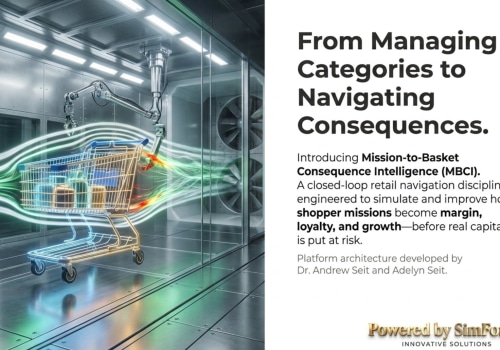
In the rapidly evolving landscape of retail, understanding consumer behavior is more critical than ever. This is where Aegis SimForgeAegis SimForge steps in, offering an innovative approach to simulate and analyze how shoppers make decisions before they even enter a store or click on a website. By leveraging advanced synthetic shopper wind tunneling techniques, Aegis SimForge provides retailers with the tools needed to predict consumer behavior and optimize their strategies accordingly. This article delves into the intricacies of consumer behavior simulation, exploring how it can enhance the retail experience and drive business success. As we examine the concept of consumer behavior simulation, we will uncover how Aegis SimForge integrates multiple dimensions of retail intelligence, including category management, shopper missions, and basket economics. steps in, offering an innovative approach to simulate and analyze how shoppers make decisions before they even enter a store or click on a website. By leveraging advanced synthetic shopper wind tunneling techniques, Aegis SimForge provides retailers with the tools needed to predict consumer behavior and optimize their strategies accordingly. This article delves into the intricacies of consumer behavior simulation, exploring how it can enhance the retail experience and drive business success. As we examine the concept of consumer behavior simulation, we will uncover how Aegis SimForge integrates multiple dimensions of retail intelligence, including category management, shopper missions, and basket economics.
By understanding why shoppers enter the marketplace and what values they seek to assemble, retailers can better navigate the complexities of consumer preferences and market dynamics. The ability to simulate alternative futures allows businesses to foresee potential outcomes, making informed decisions that can lead to increased loyalty, reduced leakage, and improved margins. Join us as we explore the pivotal role of consumer behavior simulation in reshaping retail strategies and fostering growth in an increasingly competitive environment. Discover how Aegis SimForge not only calibrates reality but also simulates possibility, creating a comprehensive framework for understanding and enhancing shopper interactions. Aegis SimForge serves as a pioneering platform in the realm of simulating consumer behavior within retail environments. At the core of its approach lies a comprehensive understanding of critical components that contribute to effective retail strategies.
These components include category management, shopper missions, basket economics, and category intelligence. By analyzing these elements, Aegis SimForge enables retailers to gain profound insights into shopper behavior and preferences, ultimately driving business success.
Category management
involves the strategic approach retailers and suppliers take towards managing product categories effectively. This includes optimizing product assortments, pricing strategies, and promotional activities to align with consumer demand. In conjunction with category management is the concept of shopper missions, which explains the underlying reasons why consumers enter a retail space.Understanding these missions allows retailers to tailor their offerings and enhance the shopping experience.
Basket economics
plays a crucial role in understanding the value shoppers assemble during their visits. By examining what products are frequently purchased together, retailers can identify trends and preferences that inform inventory decisions and promotional strategies. For example, if data shows that customers frequently buy coffee along with pastries, a retailer might choose to place these items in close proximity to encourage additional sales. The integration of category intelligence adds another layer of depth to Aegis SimForge's capabilities. This element focuses on monitoring how demand shifts, how competitors respond, and how shopper behavior changes over time.Retailers can leverage this intelligence to anticipate market trends and adjust their strategies accordingly. For instance, if a new competitor enters the market with aggressive pricing, category intelligence can help retailers adapt their offerings to maintain customer loyalty. One of the standout features of Aegis SimForge is its ability to utilize synthetic shopper wind-tunneling. This innovative method allows retailers to simulate various scenarios and observe potential impacts on shopper behavior before implementing any changes in real-world settings. By creating virtual environments where different variables can be tested, retailers gain valuable foresight into how adjustments might influence sales, customer satisfaction, and overall business performance. The process of closed-loop calibration is essential for ensuring accuracy in Aegis SimForge's predictions.
By utilizing historical data as a benchmark, this method corrects forward-looking predictions, providing retailers with reliable insights that inform decision-making. For example, if a retailer is considering introducing a new product line, closed-loop calibration can help them assess how similar products have performed in the past under comparable conditions. However, implementing these sophisticated systems does not come without challenges. Retailers may face obstacles such as data integration issues, resistance to change within the organization, or a lack of understanding of how to leverage insights effectively. Aegis SimForge addresses these challenges by providing tailored support and resources to help retailers navigate the complexities of integrating advanced retail intelligence.
With its comprehensive framework, Aegis SimForge empowers businesses to overcome hurdles and optimize their operations. In conclusion, Aegis SimForge stands at the forefront of simulating consumer behavior, offering retailers an invaluable toolset for understanding shopper missions and translating them into actionable insights. By focusing on core components like category management, basket economics, and category intelligence, retailers can navigate the complexities of modern retail environments with confidence. The unique capabilities of synthetic shopper wind-tunneling and closed-loop calibration further solidify Aegis SimForge's position as a leader in retail innovation.
The Role of Shopper Missions in Retail Strategy
In the ever-evolving landscape of retail, understanding shopper behavior is paramount.Aegis SimForge
provides a sophisticated platform that allows retailers to simulate consumer behavior by focusing on the concept of shopper missions.Shopper missions refer to the specific objectives or reasons that drive customers to enter a store, whether it’s to purchase groceries, seek out a gift, or explore new products. Recognizing these missions is critical for retailers as they directly influence shopping patterns and decision-making processes. By analyzing shopper missions, retailers can tailor their strategies to align with customer intentions, ultimately leading to increased basket sizes. For instance, if a retailer identifies that many customers enter the store with the mission of stocking up on essentials, they might optimize product placement, promotional offers, and even in-store signage to facilitate this need. This not only enhances the shopping experience but also encourages customers to add more items to their baskets, driving higher sales. Moreover, understanding shopper missions can help retailers cultivate loyalty by meeting customer expectations effectively.
When customers feel that their specific needs are being addressed—whether through personalized recommendations or targeted promotions—they are more likely to return for future purchases. The ability to simulate these scenarios using Aegis SimForge allows retailers to anticipate customer behavior and make informed decisions that lead to business success.
Simulating Futures with Synthetic Shopper Wind-Tunneling
Aegis SimForge provides a revolutionary approach to understanding consumer behavior through its innovative synthetic shopper wind-tunneling. This advanced technique allows retailers to create detailed models of various future scenarios by utilizing current data and emerging trends. By simulating different shopper missions and their potential outcomes, retailers can gain invaluable insights into how these missions might translate into actual baskets, loyalty, and overall business success. The significance of synthetic shopper wind-tunneling lies in its ability to enable informed decision-making.Retailers can explore multiple scenarios and assess the potential impacts of different strategies before implementing them in real life. This proactive approach helps businesses identify opportunities and mitigate risks, ensuring that they are better equipped to respond to shifting consumer behaviors and market dynamics. Moreover, the insights derived from synthetic shopper wind-tunneling aid in refining category management strategies and optimizing basket economics. By understanding how demand, competition, and shopper signals are evolving, retailers can make data-driven decisions that enhance their operational effectiveness. Ultimately, this foresight capability not only drives immediate benefits but also contributes to long-term growth and sustainability. In conclusion, the integration of synthetic shopper wind-tunneling within the Aegis SimForge framework positions retailers at the forefront of retail intelligence.
By leveraging this technology, businesses can simulate possibilities and navigate the complexities of consumer behavior with greater confidence.
Category Intelligence: Adapting to Market Changes
Aegis SimForge plays a pivotal role in helping retailers harness category intelligence to navigate the complexities of the market. By analyzing shifts in demand, competition, and shopper behavior, retailers can stay ahead of the curve and respond proactively to changes that could impact their business. This analytical approach allows retailers to identify emerging trends and adapt their strategies accordingly, ensuring they remain competitive. The essence of category intelligence lies in its ability to provide real-time insights into how consumer preferences are evolving. With access to comprehensive data, retailers can understand which categories are gaining traction and which are losing relevance.This understanding enables them to optimize product assortments, pricing strategies, and promotional activities based on actual shopper behavior rather than relying on outdated assumptions. Moreover, the importance of adapting strategies based on real-time data cannot be overstated. Retailers must be agile, capable of pivoting quickly in response to market fluctuations.
Aegis SimForge
empowers retailers with the tools to simulate various scenarios and outcomes, allowing them to make informed decisions that enhance customer satisfaction and drive sales. By integrating historical data with predictive analytics, retailers can foresee potential challenges and seize opportunities as they arise. In summary, category intelligence is a critical component for retailers aiming to thrive in a dynamic marketplace.By leveraging insights from Aegis SimForge, they can adapt their strategies effectively, ensuring they meet shopper needs while optimizing their business outcomes.
The Importance of Closed-Loop Calibration
In the realm of retail, Aegis SimForge stands out as a pioneering platform that enhances the understanding of consumer behavior through its innovative closed-loop calibration process. This method is vital for retailers looking to refine their decision-making processes by integrating historical data with predictive analytics. By utilizing closed-loop calibration, businesses can effectively align their strategies with actual shopper behavior, ensuring that they remain agile in an ever-evolving market. The closed-loop calibration process begins with the collection of historical data, which serves as the foundational ground truth. This data encompasses various metrics related to shopper missions, basket economics, and category intelligence.Once gathered, predictive analytics come into play; they analyze past behaviors to forecast future trends and outcomes. The synergy between historical insights and predictive models allows retailers to simulate potential scenarios, providing a comprehensive view of how different strategies might impact consumer behavior and business performance. Moreover, closed-loop calibration acts as a feedback mechanism. As new data is continuously integrated into the system, the accuracy of predictions is refined over time. This dynamic process ensures that retailers can quickly adapt to changes in shopper missions and preferences, optimizing their approach to category management and ultimately enhancing customer loyalty and business success. In essence, closed-loop calibration transforms raw data into actionable insights that inform decision-making processes.
By leveraging the capabilities of Aegis SimForge, retailers not only gain clarity on how shopper missions translate into baskets but also position themselves for sustainable growth in a competitive landscape.
Basket Economics: Understanding Value Creation
In the realm of retail, basket economics serves as a critical framework for understanding how different products contribute to overall basket value. At the forefront of this analysis is Aegis SimForge, a leading platform that enables retailers to simulate consumer behavior and make informed decisions. By examining the composition of shopping baskets, retailers can identify which products not only drive sales but also enhance customer loyalty and satisfaction. The concept of basket economics is grounded in the idea that consumers do not shop for individual items in isolation; rather, they create baskets of products that fulfill specific needs or desires. Understanding how these baskets are formed requires a deep dive into consumer behavior simulations, which can reveal insights about shopper missions—the reasons behind their purchases.For instance, a shopper may enter a store with the mission of preparing for a family dinner, influencing their basket to include items like pasta, sauce, and salad ingredients. By analyzing these patterns, retailers can better understand the dynamics of value creation. Moreover, the interplay between various products within a basket can significantly impact overall sales and profitability. For example, certain items may serve as 'anchor' products that draw customers in, while complementary goods enhance the overall value of the basket.
Aegis SimForge
enables retailers to simulate these scenarios, allowing them to test different product combinations and predict how changes in pricing or placement might affect consumer purchasing behavior. Ultimately, mastering basket economics not only helps retailers optimize their product assortments but also aids in crafting marketing strategies that resonate with shoppers' intentions.By leveraging advanced retail intelligence through platforms like Aegis SimForge, businesses can harness the power of data-driven insights to refine their approach to basket value creation, leading to improved margins and customer loyalty. In conclusion, this article has highlighted the vital role that simulating consumer behavior plays in the retail landscape, particularly through advanced tools like Aegis SimForge. By understanding shopper missions and their translation into baskets, retailers can better navigate the complexities of consumer behavior and make informed decisions that drive business success. We have explored how basket economics and category intelligence contribute to value creation and adaptability in a changing market. Furthermore, the concept of synthetic shopper wind-tunneling allows retailers to simulate various future scenarios, enabling proactive strategies rather than reactive measures. Closed-loop calibration ensures that these simulations are grounded in reality, enhancing their predictive accuracy. As we move forward in an increasingly competitive retail environment, it is essential for retailers to adopt methodologies like Aegis SimForge that focus on understanding and simulating consumer behavior.
By doing so, they can optimize outcomes, improve shopper experiences, and ultimately foster loyalty and growth.